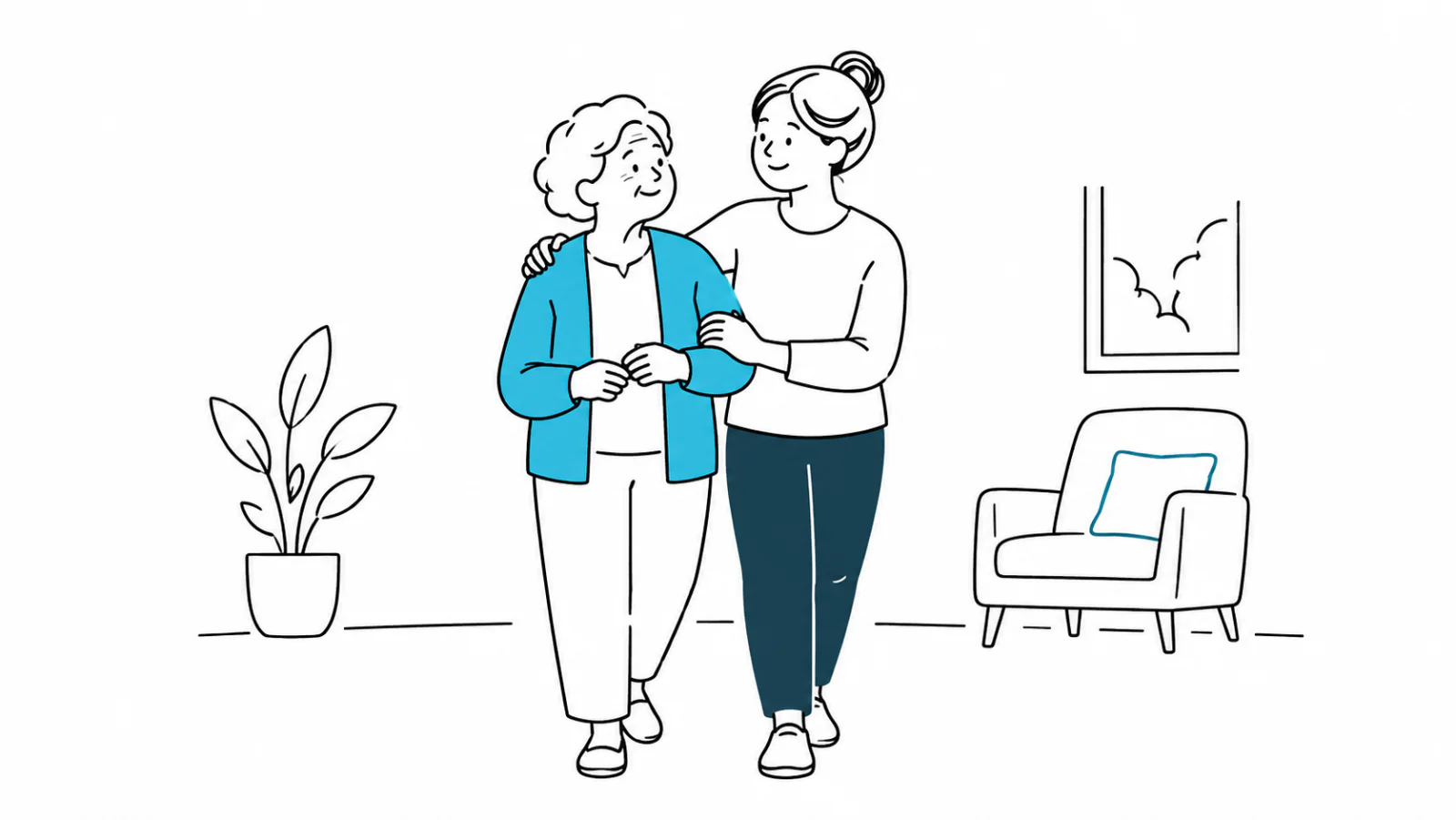
Dementia affects communication, limiting the ability to use and understand words. In the more advanced stages, non-verbal communication, including body language, tone of voice and facial expressions, becomes more relevant. As the ability to process verbal information diminishes, the way caregivers communicate is essential to promoting positive and meaningful interactions.
Eliminating distractions – Make sure there are no competing stimuli that interfere with communication, such as the television, radio, people talking loudly or other noises.
Maintaining eye contact – Approach the person from the front, stay at their eye level, call them by name and gently touch their hand or arm, to help them direct their attention and focus on the message.
Speaking calmly – Speak in a calm, unhurried and confident tone. If the person has hearing problems, lower the pitch of your voice.
Conveying one message at a time – Use simple words, short sentences and avoid multiple instructions at the same time. Questions with two options preserve autonomy and make it easier to decide. For example, “would you like tea or coffee?”.
Allowing time to respond – Give the person the time they need to respond. Rushing or interrupting them can cause confusion and discourage communication. Also pay attention to facial expressions and body language to check whether the message is being understood or whether the person seems frustrated or upset.
Speaking positively and demonstrating – Use gestures to help convey the message, such as pointing to objects or demonstrating the action, and avoid using sentences in the negative: instead of saying “Don’t go outside”, opt for “Stay inside”. You can also use humour, but never at the person’s expense.
Respecting – It is essential always to recognise the person’s presence, addressing them and involving them in the conversation, as well as encouraging the people you communicate with to follow this principle.