Lifestyle plays a fundamental role in brain health. Regular physical exercise adapted to one's age and physical condition, a balanced diet, stress management — including the way life's challenges are dealt with — and the appropriate treatment of chronic diseases all contribute to healthy ageing and to reducing the risk of dementia.
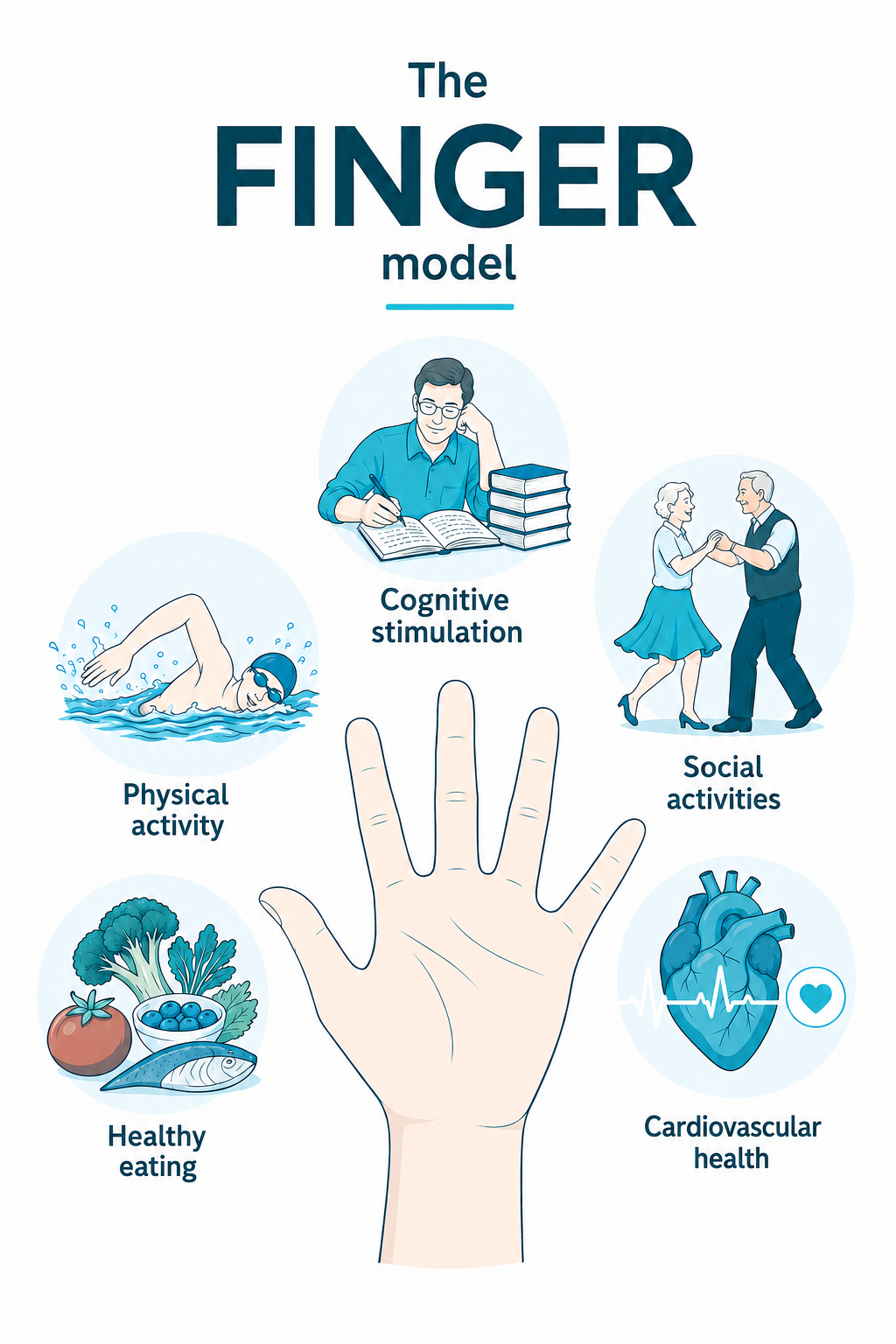
Interacting with family, friends and the neighbourhood network and taking part in community life have a protective role, reinforce the sense of identity and of having a continued place in the world, and provide support in coping with life events.
Keeping the brain active is of utmost importance: reading, learning new things, solving problems, playing games, talking and taking part in activities that stimulate memory, attention and reasoning all help to preserve cognitive function and to improve adaptability to new situations.
Several studies have shown that combining a number of healthy habits is more effective than acting in just one area. Prevention programmes, such as the Finnish FINGER study (Finnish Geriatric Intervention Study to Prevent Cognitive Impairment and Disability), have shown that a simultaneous approach across several domains — including a healthy diet, physical exercise, cognitive stimulation, social contact and monitoring of cardiovascular risk factors — can help to prevent or delay cognitive decline.